
Construction CRM: Why Your Account-Based System Can’t See What’s Happening on the Project
How construction and building materials teams lose visibility on their biggest deals, and how a project-based Salesforce setup fixes it.
Pull up your biggest deal right now. Not the amount. Not the close date. Just answer one thing: what’s actually happening on that project today?
Who is the decision-maker this week? Has the architect approved your product? Is the tender still open? Is the budget still alive?
If you can’t answer in thirty seconds, it’s not because your team isn’t working. It’s because your construction CRM was never built to answer that question.
In this guide, we’ll look at why most CRMs fail construction and building materials companies, the four blind spots that quietly cost deals, and how Salesforce for construction can be designed around projects instead of accounts.
Why Most Construction CRMs Fall Short
Most CRM systems were built around the account: the company you sell to. That works when one buyer makes one decision.
Construction doesn’t work that way. A single project involves many people, each with their own priorities.
- Owner: starts the project with a vision and a budget
- Architect: shapes the design and the specification
- Consultant: makes the technical calls on performance and compliance
- Contractor: runs execution and the schedule
- Subcontractors: quietly decide what gets installed
- Dealer or distributor: controls how the material is purchased
- Procurement: pushes on price and terms
- Site team: deals with delivery delays and missing material
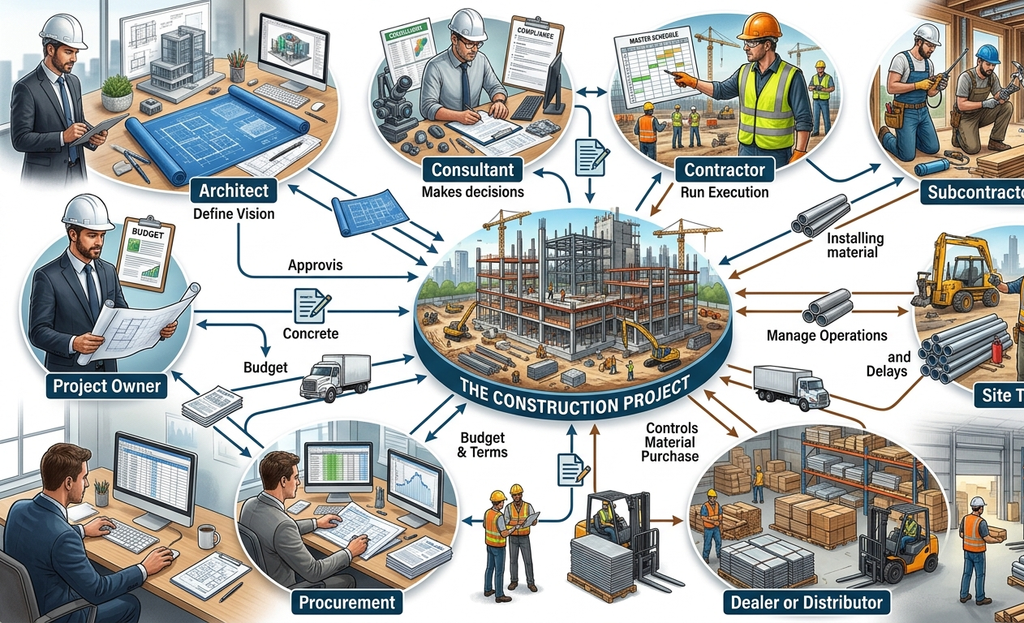
That’s eight people with eight priorities, all shaping one outcome. Now look at what your CRM shows: one account, one amount, one close date.
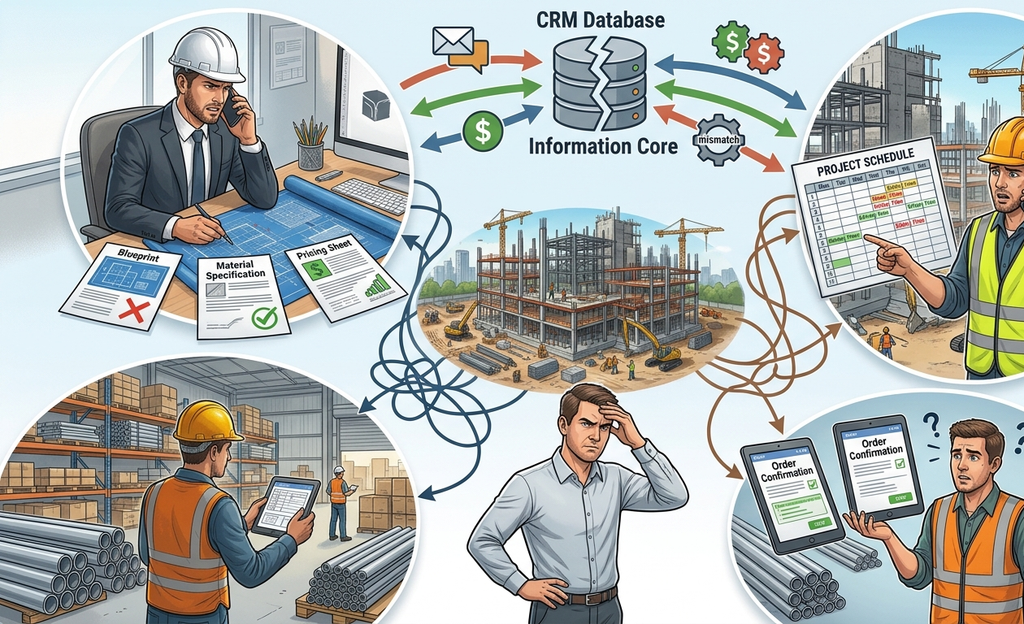
The real story sits in five inboxes, a few WhatsApp groups and someone’s memory. When that person leaves, the deal knowledge leaves with them.
It’s Not a Sales Team Problem. It’s a CRM Design Problem.
Your reps are not the issue. They’re on calls, chasing approvals and visiting sites every day.
The problem shows up when leadership asks, “What’s really happening on this project?” Someone has to rebuild the story from memory: who the decision-maker is, what the specification says, where the tender stands, whether the budget has changed.
A CRM that needs a human translator isn’t really working. It’s a notebook with a login screen.
4 Blind Spots That Cost Construction Sales Teams Deals
1. You Find Out About Projects Too Late
By the time many teams hear about a project, the architect has already specified a competitor. The product is in the drawings. You’re no longer influencing the decision, you’re trying to undo it, and that is a harder and more expensive sale.
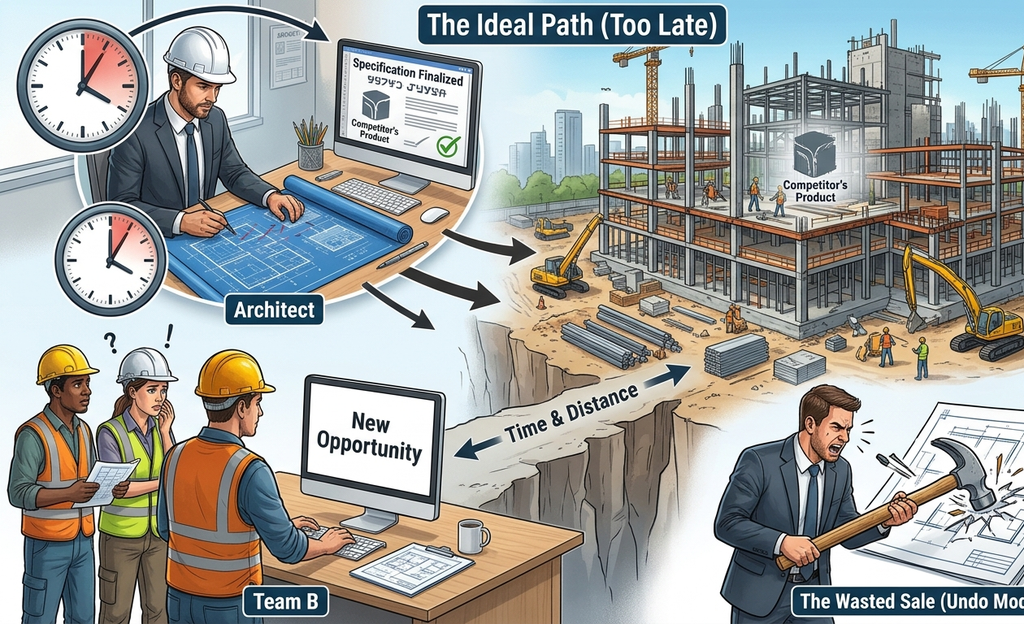
The projects you win are usually the ones you entered early, while the design was still open. An account-based CRM often shows you a project only after someone creates an opportunity, which is often too late.
2. Your Team Competes With Itself
One rep talks to the contractor. Another talks to the dealer. A third meets the architect every month. It’s the same project, but in the CRM it looks like three unrelated conversations.
Nobody owns the full picture. Messaging overlaps, pricing signals conflict, and one rep promises something the others don’t know about. Your stakeholders notice even when your internal team doesn’t.
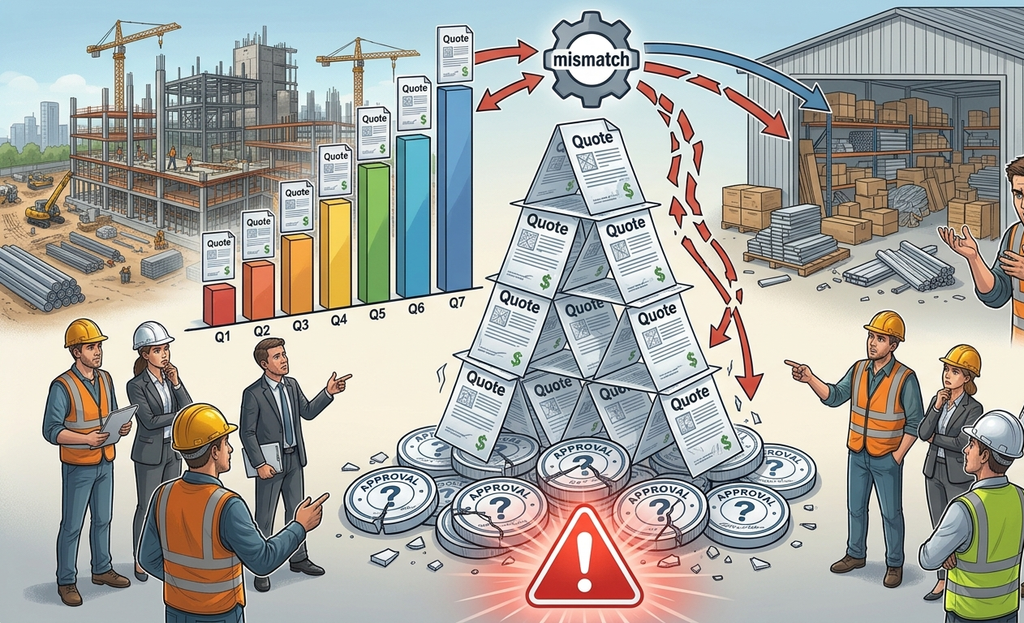
3. Your Sales Forecast Is Built on Quotes, Not Approvals
A quote went out, so the deal looks active. A date is on the calendar, so it looks real. But is the product approved? Has the consultant signed off?
A quote is not a commitment. When forecasts follow quotes sent instead of milestones achieved, leadership plans production, stock and targets around revenue that was never as solid as it looked.
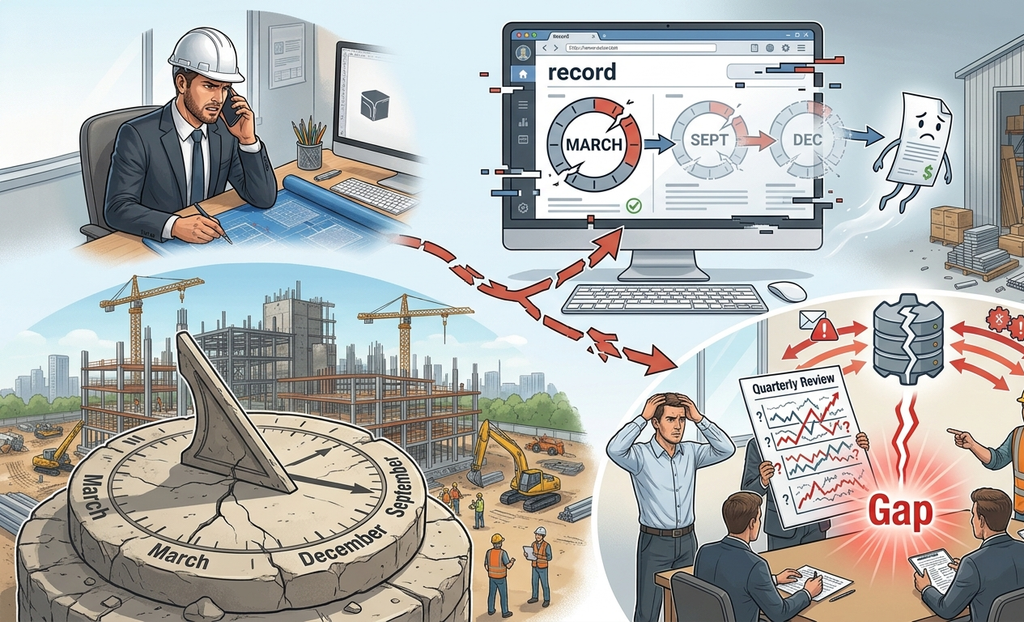
4. Your CRM Doesn’t Move When the Project Does
Construction projects slip. A March close quietly becomes September, then December. But the record still says March, because nothing updates itself when reality changes. The CRM slowly drifts from the truth until a quarterly review exposes the gap.
How Salesforce for Construction Fixes This
At Titanium Tekzi, we don’t start by asking how to fit your process into Salesforce. We start by asking how a project actually moves from first conversation to revenue, and then we build around that.
The project becomes the center. Every stakeholder, quote, technical request and delivery window lives in one place.
Finding out too late.
When architects and consultants are linked to the project record, your team can see who is shaping the design and engage them before the specification is locked. You move from reacting to influencing.
Competing with yourself.
Every conversation across every stakeholder shows on one record, so your team sells as one. The rep talking to the dealer can see what the rep talking to the contractor just discussed.
Fictional forecasts.
Your pipeline follows real milestones: specification approved, tender status and budget confirmed. Leadership can tell a deal that is moving from one that only looks active because a quote went out.
A CRM that doesn’t move.
The system flags projects that go quiet for thirty days, warns you before a quote expires and alerts you when an award date slips. You hear about changes when they happen, not at quarter-end.
Knowledge leaving with people.
Notes, contacts and next steps stay on the project, so anyone can pick it up on day one, even if the original rep has moved on.
What a Normal Monday Looks Like
Your sales head opens Salesforce and sees top projects instead of a list of accounts and amounts. For each one, they can see who’s involved, what’s approved, what’s stuck and what happens next.
One project shows a thirty-day inactivity alert. Another has a quote expiring on Friday. A third has an award date pushed out by two months, and the forecast has already adjusted. Nobody had to chase anyone for an update.
Get Real Revenue Visibility
Construction sales was never account-based. It’s project-based, stakeholder-driven and milestone-dependent. If your CRM can tell you who the customer is but not what’s happening on the project, you don’t have revenue visibility.
The good news is that this is fixable, and it starts with building the system around the way your projects actually move.
Want to find out where your CRM is breaking down? Talk to Titanium Tekzi. We’ll walk through one of your live projects and show you what your CRM is missing.
